
A personal account of nights, weekends, and a lot of failed proposals.
I didn’t plan to become a freelancer. I kind of fell into it the way most people do: a little financial pressure, a YouTube rabbit hole, and a late Tuesday night, where I thought, well, what’s the worst that could happen?
I’m a developer. I had skills. I had evenings. I figured Upwork would be simple enough: make a profile, apply for jobs, get paid. That’s what it looked like from the outside, anyway.
It is not that simple. Not even close.
The First Few Weeks Nearly Broke Me
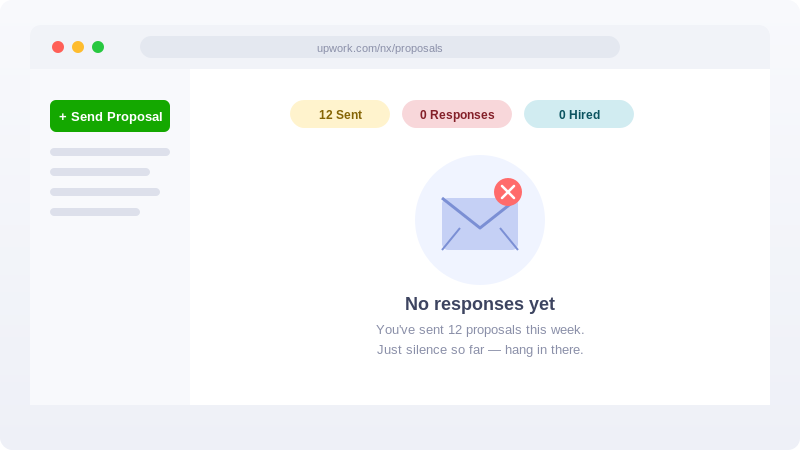
I remember sending my first five proposals and feeling genuinely excited. Then nothing happened. So I sent five more. Still nothing. No responses, no rejections, not even a polite “thanks, not interested.” Just silence. The kind that makes you start questioning whether you’re actually as good as you thought you were.
The thing nobody explains when you sign up is that Upwork is built entirely on trust signals, and when you’re new, you have none. You’re asking a stranger to hire you over someone who already has a 4.9 rating, ten five-star reviews, and a portfolio full of completed work. Why would they take that risk? They probably won’t. And honestly, I wouldn’t either.
By the end of week three, I seriously thought about deleting my account. I had spent real time writing proposals, tailoring pitches, researching clients, and had nothing to show for it. It felt pointless.
But I didn’t quit. Mostly out of stubbornness. And partly because of one piece of advice a fellow freelancer gave me around that time: get Freelancer Plus.
I was skeptical. Spending $20 a month on a platform that hadn’t made me a single dollar yet felt backwards. But I trusted the advice and upgraded to Freelancer Plus anyway. The difference was almost immediate — more proposal connects, the ability to see what competitors are bidding, and just a general sense that I was playing the game properly instead of from the sidelines. Looking back, that $20 is probably the best money I’ve spent on this whole journey. The month I upgraded was the same I landed my first job. Coincidence? Maybe. But I’d tell any new freelancer to stop hesitating and just get it.
The First Job Changes Everything
My first contract came about three weeks in. It wasn’t glamorous, a small fix, the kind of task that takes an afternoon. But I treated it like the most important project I’d ever touched. I communicated at every step. I delivered ahead of schedule. I asked for feedback before calling it done.
The five-star review that followed felt disproportionately good.
Not because of the money, the job was small. But something clicked. A real person, with real choices, looked at my profile and decided I was worth hiring. That’s different from a salary. A salary is just something that shows up because you showed up. This was someone actively choosing me out of a list of options. That hit different.
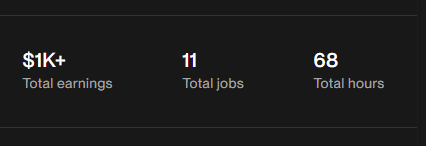
I kept at it after that. Slowly, the contracts started coming more regularly. The earnings stacked up quietly in the background. When I finally crossed $1,000 total earned on the platform, I just stared at the number for a moment. It wasn’t a life-changing amount. But it was money I’d made entirely on my own, no employer, no office, just me and skills I already had. That felt worth protecting.
Nobody Talks About the Tired Part
Here’s the thing about side hustle content online: it usually skips the part where you still have a full-time job.
There were nights I was knee-deep in a client’s codebase at 11 p.m., knowing I had an early meeting the next morning. Weekends I’d genuinely planned to take off, only to find myself replying to messages instead. Upwork doesn’t know your schedule. Clients are across time zones. And when you’re still building your reputation, going quiet feels risky.
The burnout is real, and it sneaks up quietly. You don’t notice it until you’re sitting at your laptop on a Sunday afternoon, feeling resentful about work you chose to take on.
I had to get more intentional about it, setting limits on how many active contracts I’d carry at once, being honest upfront about my availability, and accepting that turning down the wrong project is better than saying yes and doing mediocre work. Your Job Success Score on Upwork matters a lot. But your sleep matters more.
I’m still figuring out that balance. I won’t pretend I’ve got it sorted.
What Actually Changed
The income is real, and it matters. But it’s not the most interesting thing Upwork gave me.
What surprised me was how much faster I started growing as a developer. In a full-time job, you work inside one context, one company, one stack, one team’s habits. Freelancing cracked that open. I’ve now worked across different industries, on problems I’d never have encountered in my day job. Each project taught me something my employer couldn’t. I got better at scoping work, communicating clearly, and adapting quickly. Skills I didn’t even know I was building until I looked back.
There’s also something quieter going on. Every time a client chooses your proposal out of a stack, it’s a small confirmation that what you know has real value outside your current job. Those confirmations build up. You start seeing yourself less as someone who works for a company and more as someone whose skills can stand on their own. That identity shift, I didn’t expect it, but it’s stuck with me.
According to Upwork’s 2026 freelancing data, over 76 million Americans are now freelancing, and the vast majority started doing it alongside a full-time job, exactly like I did. That number is projected to hit 86.5 million by 2027, making freelancers the majority of the U.S. workforce.
Is It Actually Worth It?
Yeah. For me, it is. But I won’t oversell it.
Upwork as a second income works if you treat it seriously, not like a passive income stream, not like a lottery ticket. You have to be patient in the early months when the effort clearly outweighs the return. You have to communicate well, price yourself thoughtfully, and actually deliver what you say you will. And you have to be honest with yourself about how much bandwidth you really have.
It doesn’t work as a shortcut. It doesn’t work if you’re already running on empty. And it doesn’t reward shortcuts, clients, and the platform both notice.
But if you have skills, a few hours a week, and the patience to play a slow game, it’s one of the more honest ways I know to build something that’s genuinely yours on the side.
I’m still building. Still learning. Still occasionally sending proposals that go nowhere.
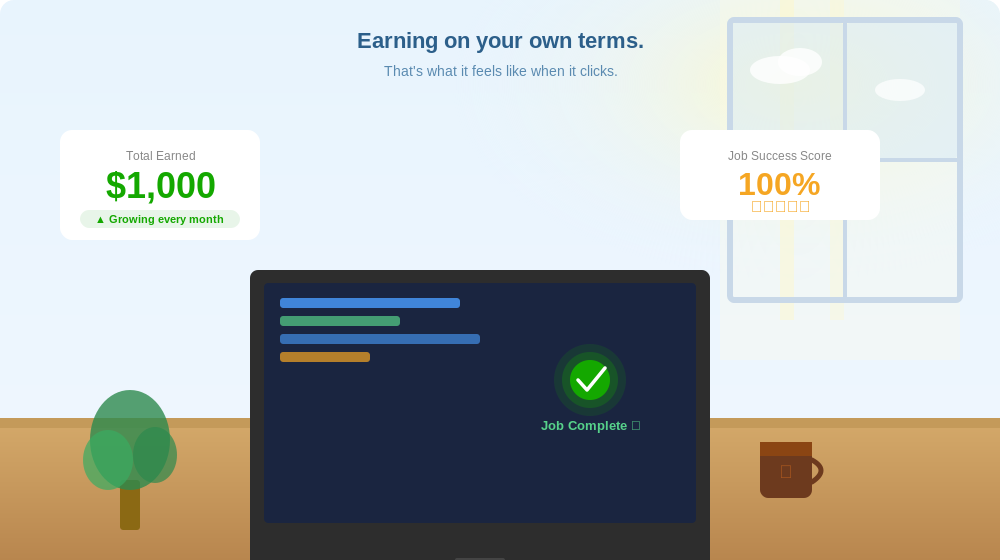
But I’m also earning on my own terms. And that’s enough.
Frequently Asked Questions
Is Upwork worth it for developers as a second income? Yes, especially if you have in-demand skills. The early months are slow, but once you build reviews and a solid profile, consistent work becomes much more achievable.
Is Freelancer Plus worth the $20/month? In my experience, absolutely. The extra connects and bidding visibility made a real difference when I was starting out. It was the month I upgraded that I landed my first job.
How long does it take to get the first client on Upwork? It varies, but realistically expect 2–6 weeks of active proposals before landing your first contract. Don’t get discouraged by silence, it’s normal in the early stage.
How do I improve my Job Success Score on Upwork? Communicate clearly, deliver on time, and only take jobs you can genuinely do well. One bad review early on hurts more than it would later, so be selective and realistic about what you take on.
Written from personal experience — one developer’s honest take on freelancing as a second income.