
I want to talk about something that’s been sitting heavy with me for a few weeks.
The company I work for just had a round of layoffs. This is a place that, for years, had a reputation in the industry for the opposite of good work-life balance, decent job security, the kind of place people stayed at. Nobody got a clear reason. The rumor making the rounds is that it’s restructuring tied to AI.
Friends are gone. People I sat next to, people I learned from. The rest of us are still here, but honestly, the mood isn’t the same. Two questions hang over every standup now: when’s the next round, and what is work actually supposed to look like from here?
Before I go further, I’m not anti-AI. I want to get that out of the way because the moment you criticize anything about how AI is being rolled out at work, people assume you’re some kind of luddite shaking your fist at the cloud. I’ve been a software engineer for over seven years. I use AI every day. I’m writing this partly because I’ve been trying to figure out, for myself, what’s actually bothering me.
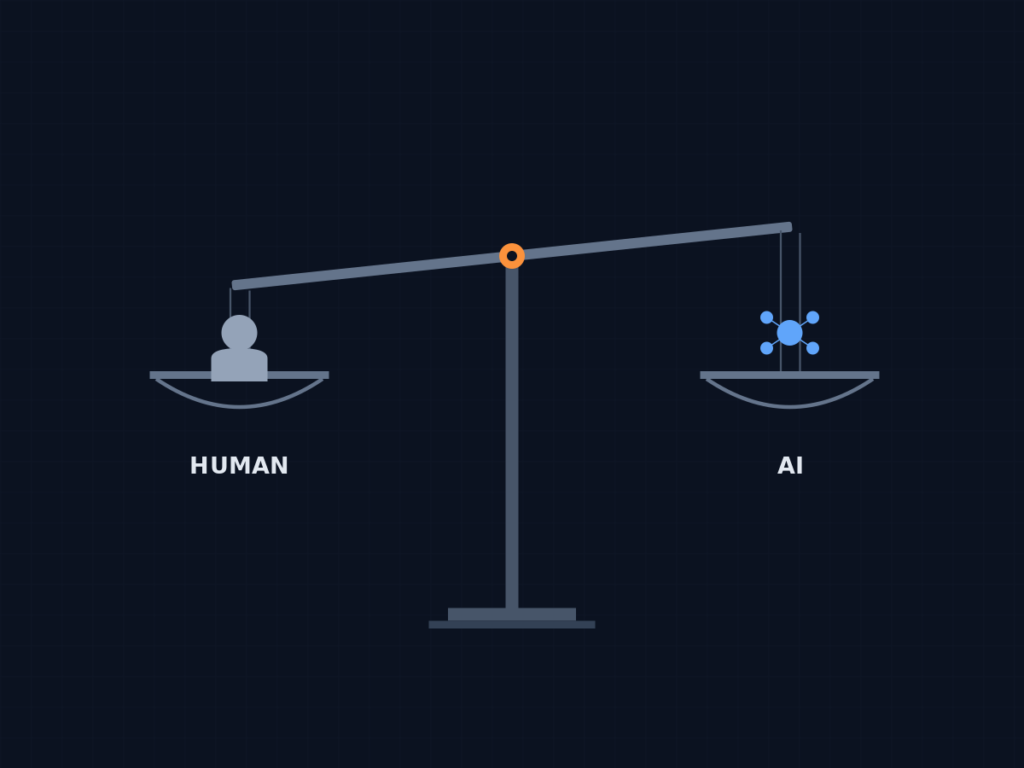
Why companies are pushing AI so hard
Honestly, I think it comes down to three things, and you can probably guess all of them.
One, reputation. Being seen as an “AI-first” company is good for the brand and good for the stock.
Two, cost. Fewer engineers, same output at least, that’s the pitch on the slide deck.
Three, throughput. More shipped per quarter, with the team you’ve got (or the smaller team you’ve got after the layoffs).
Of course, none of these are crazy on their own. Companies have always chased efficiency. The question I keep getting stuck on is whether the strategy actually works once you zoom out past the next quarter.
What AI is genuinely good for
I’ll be honest, AI has made parts of my job a lot better.
I’ve changed companies a few times in my career, and every move means starting from zero on a new domain. The bank’s lending logic. The retailer’s inventory system. Whatever it is. Ramping up used to take weeks of reading code, asking people questions, and slowly building a mental model of what was going on. Now I can paste a service into Claude and get a reasonable explanation in five minutes. That’s not nothing.
The day-to-day stuff:
- A ticket that used to take me five days, I can often finish in one or two.
- Writing tests is faster.
- Reviewing PRs is faster.
- It catches dumb mistakes I would’ve shipped.
So if you’re a developer and you’re not using AI as part of how you work, you’re making your life harder for no reason. I’ll say that plainly.
Where it starts to fall apart
Here’s the part I think a lot of leadership is glossing over.
Sure, AI writes code that works. That’s not the same thing as code that’s good. And it’s definitely not the same thing as code that’s maintainable.
Six months from now, when something breaks in production at 2am, who’s debugging the AI-generated module? The AI? The developer who skimmed it, ran the tests, and merged it without ever really understanding what it does? Because that’s the situation we’re walking into.
Now think about a legacy system. Five years old, maybe more. Layers of decisions, weird workarounds, edge cases that exist for reasons nobody documented. The kind of system where there’s a comment that says // don't touch this and the person who wrote it left the company in 2021. You can’t just point AI at that and tell it to “modernize.” Or you can, but you’re going to find out the hard way which assumptions it broke.
I keep saying this to people and I’ll say it here too: AI is a tool, not a developer. There’s a real difference between AI-assisted engineering and AI-driven engineering. Right now, a lot of companies don’t seem to know which one they’re actually buying.
What I keep coming back to
The thing that nags at me is the gap. The gap between what AI can ship fast today and what teams are going to be paying for in two years — in maintenance, in incidents, in the tribal knowledge that walked out the door when the last round of layoffs went through.
AI doesn’t go on-call. It doesn’t sit in a postmortem. And it doesn’t know why that workaround from 2022 is still in the code, or which customer would notice if you removed it. The people who knew that stuff just got let go to make the quarterly numbers look better.

So, will it work out? Honestly, I don’t actually know. Maybe I’m wrong and the next generation of AI tools fills the gap. Maybe the tooling gets so good that maintenance becomes a non-issue. I’m open to it. I just haven’t seen the evidence yet, and the speed at which companies are betting on it makes me uneasy.
If you’re seeing this from a different angle, especially if you’re someone making these calls and you think I’m missing something, I’d actually want to hear it. I’m not trying to be smug. I’m just tired, and I want to think this through with people instead of in my own head.